
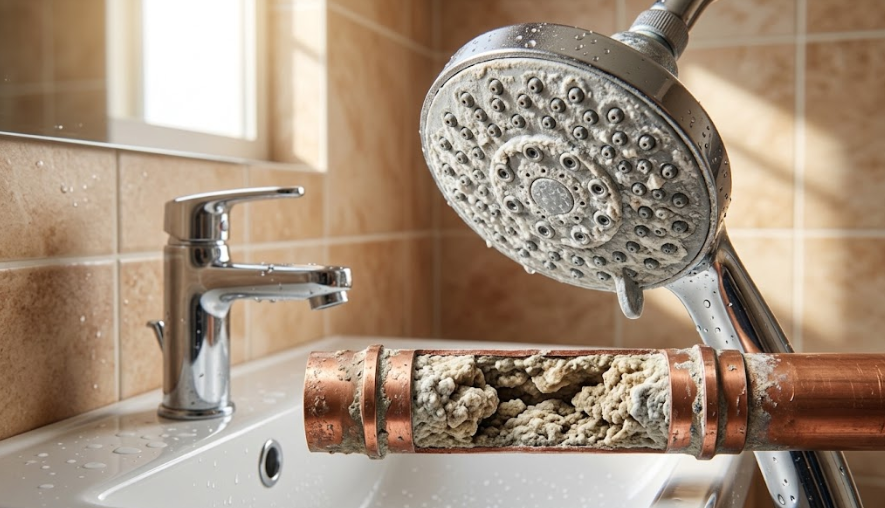
If you live in Kingman, AZ, you’ve probably noticed white crust on your faucets, spots on your dishes, or soap that just won’t lather. That’s hard water, and it’s a fact of life here. Understanding why Kingman’s water is so hard — and what it’s doing to your plumbing — helps you catch damage before it turns into a costly repair.
Table of Contents
What Makes Kingman’s Water So Hard
Hard water contains high levels of dissolved calcium and magnesium. These minerals get picked up as groundwater moves through rock and soil before reaching your tap.
Kingman sits in the Hualapai Valley, an area with limestone and calcium-rich geology. Groundwater here passes through these mineral deposits on its way into the local aquifer, which supplies most homes in the city.
According to the U.S. Geological Survey, water is generally classified as hard once it exceeds 121 mg/L of dissolved minerals — and much of Mohave County’s groundwater falls well above that line. Kingman’s municipal water routinely tests in the “very hard” range, often above 15 grains per gallon (GPG).
| Hardness Level | Grains Per Gallon (GPG) | Typical in Kingman? |
|---|---|---|
| Soft | 0–1 | No |
| Moderately hard | 3.5–7 | No |
| Hard | 7–10.5 | Sometimes |
| Very hard | 10.5+ | Yes, most areas |
How Hard Water Affects Your Plumbing
Calcium and magnesium don’t stay dissolved forever. As water heats up or sits in pipes, these minerals separate out and form scale — a hard, chalky buildup that clings to any surface it touches.
Scale Buildup Inside Pipes
Scale narrows the inside diameter of your pipes over time. This restricts water flow, lowers pressure at your fixtures, and puts extra strain on your plumbing system. In older galvanized pipes, scale buildup can eventually choke off flow almost completely.
Water Heater Damage
Your water heater takes the worst of it. Mineral sediment settles at the bottom of the tank, forcing the unit to work harder and burn more energy to heat the same amount of water. Left unchecked, this shortens the tank’s lifespan and can lead to premature failure. If your unit is struggling, our page on common water heater problems covers the warning signs worth watching for.
Faucet and Fixture Wear
Hard water leaves mineral deposits inside faucet cartridges, showerheads, and valves. This causes dripping, reduced water pressure, and premature wear on rubber seals and washers.
Appliance Strain
Dishwashers, washing machines, and garbage disposals all suffer from mineral buildup in their internal lines and pumps. You’ll often see this as cloudy dishes, stiff hoses, or appliances that stop draining efficiently.
Drain and Pipe Corrosion
Over years, scale combined with mineral-heavy residue can contribute to slow drains and, in some cases, pinhole leaks as pipe walls weaken. If you’re dealing with persistent buildup, a professional drain cleaning service can clear existing blockages before they get worse.
Signs You Have a Hard Water Problem
Use this quick checklist to see how hard water might already be affecting your home:
- White or chalky residue around faucets and showerheads
- Reduced water pressure throughout the house
- Soap and shampoo that don’t lather well
- Spots or film on dishes and glassware after washing
- Dry skin or dull, stiff-feeling laundry
- Frequent water heater repairs or a shorter tank lifespan
- Visible scale buildup inside kettles or coffee makers
If three or more of these sound familiar, hard water is likely already affecting your plumbing system, not just your appliances.
How to Fix and Manage Hard Water
- Install a water softener. A whole-house softener uses ion exchange to remove calcium and magnesium before water reaches your pipes. This is the most effective long-term fix.
- Descale your water heater annually. Flushing sediment out of the tank once a year helps it run efficiently and last longer.
- Clean fixtures regularly. Soaking showerheads and faucet aerators in a mild descaling solution keeps mineral buildup from clogging them.
- Check pipes for scale buildup. If water pressure has dropped gradually over the years, aging pipes may already have significant internal scaling.
- Consider repiping if damage is advanced. Severely scaled or corroded pipes sometimes need replacement rather than cleaning. Our repiping services are worth a look if you’re seeing frequent leaks or persistently low pressure across multiple fixtures.
When to Call a Plumber
Some hard water problems are DIY-manageable, but others need a professional. Call a plumber if you notice:
- Water pressure that’s dropped significantly in the last year
- Rusty or discolored water coming from your taps
- Recurring water heater issues despite regular maintenance
- Visible corrosion, pinhole leaks, or damp spots near pipes
- A water softener that isn’t improving your water quality
A licensed plumber can run a water hardness test, inspect exposed pipes, and tell you whether the fix is a softener, a repipe, or something in between. Typical hard water related plumbing repairs in Kingman range from $150 for a fixture cleaning or descaling to $2,000+ for water heater replacement, with whole-house softener installation and repiping priced separately based on system size.
Prevention Tips
- Flush your water heater every 12 months, sooner if you notice sediment.
- Install a water softener or a point-of-use filter for major appliances.
- Use vinegar-based descaling solutions on showerheads and faucets monthly.
- Have your plumbing inspected every couple of years, especially in homes over 15 years old.
- Watch your water bill for unexplained increases, which can signal a hidden leak worsened by scale-related pipe stress.
FAQs
Is Kingman’s tap water safe to drink even though it’s hard?
Yes. Hard water is a mineral content issue, not a safety issue. It’s safe to drink, though it can affect taste and cause buildup in appliances over time.
How much does a water softener cost to install in Kingman?
Whole-house softener systems typically range from $1,200 to $2,500 installed, depending on unit size and household water usage.
Will hard water void my water heater warranty?
Some manufacturers require regular maintenance, including flushing, to keep the warranty valid. Check your unit’s documentation, since mineral damage from neglect isn’t always covered.
Can hard water actually cause pipe leaks?
Indirectly, yes. Scale buildup narrows pipes and increases pressure stress on weak points, which can accelerate corrosion and lead to leaks over time, especially in older galvanized piping.
How often should I flush my water heater in a hard water area like Kingman?
Once a year is standard. Homes with especially high hardness levels may benefit from flushing every 6–9 months.
Ready to Protect Your Pipes?
If you’re in Kingman and dealing with scale buildup, low pressure, or water heater trouble, a licensed plumber can diagnose the cause quickly and recommend the right fix for your home.
13 thoughts on “Why Kingman, AZ Has Hard Water (And What It Does to Your Pipes)”