
Summer temperatures in Kingman regularly climb past 105°F, and that heat doesn’t stay outside. It works its way into exposed pipes, attic plumbing, outdoor fixtures, and water heaters, stressing components that are built to handle water pressure, not desert-level heat.
Most summer plumbing failures don’t happen without warning. They build up over weeks of expansion, pressure changes, and heat exposure until a fitting cracks or a line finally gives out. This checklist covers what to inspect, what to fix, and when heat-related wear needs a professional look.
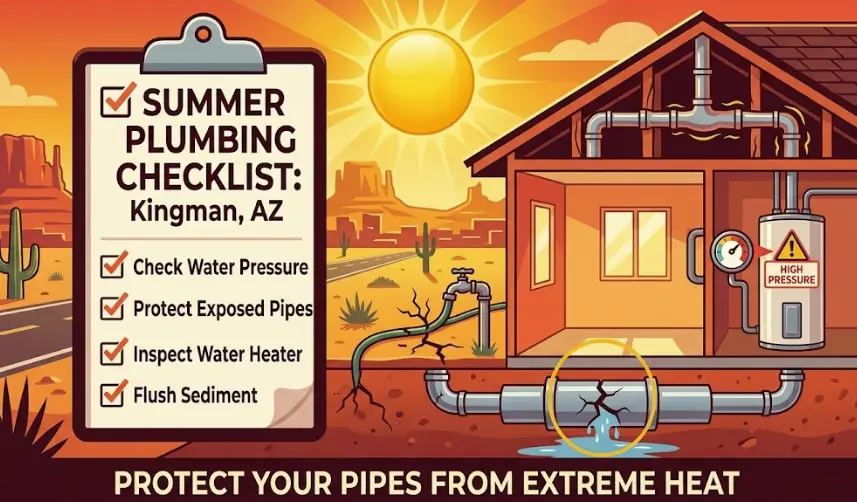
Table of Contents
Why Extreme Heat Stresses Plumbing
Heat affects plumbing in ways that are easy to overlook until something fails.
- Pipe expansion — Metal and plastic pipes expand as temperatures rise, and repeated expansion/contraction cycles weaken joints over time.
- Higher water pressure — Heat increases pressure in closed systems, especially where expansion tanks are involved.
- Faster water heater wear — Higher incoming groundwater temperatures plus high ambient heat make water heaters cycle differently and can accelerate sediment hardening.
- Slab and foundation shifting — Extreme heat dries and shifts soil around Kingman homes, which can stress underground water lines and lead to slab leaks.
- Outdoor fixture exposure — Hose bibs, irrigation lines, and exposed piping sit directly in triple-digit heat for months.
None of these issues show up overnight, but by mid-summer they’re often responsible for the plumbing calls we see spike across Mohave County.
Summer Plumbing Checklist
| Area | What to Check | Why It Matters |
|---|---|---|
| Exposed pipes | Look for cracks, warping, or discoloration | Prevents heat-related pipe failure |
| Hose bibs & outdoor faucets | Check for drips or weak flow | Heat-worn washers fail faster in summer |
| Water heater | Listen for popping/rumbling; check age | Heat plus sediment buildup shortens tank life |
| Water pressure | Test with a pressure gauge (ideal: 40–60 psi) | High heat can push pressure above safe limits |
| Expansion tank | Check for sagging or water at the tank | A failing tank can’t absorb summer pressure spikes |
| Slab area / flooring | Watch for warm spots or unexplained damp patches | Early sign of a slab leak |
| Irrigation & sprinkler lines | Inspect for pooling or soft ground | Heat-cracked lines waste water and stress the system |
| Water line insulation | Confirm exposed lines have insulation or shading | Reduces heat transfer into the pipe |
Running through this list once at the start of summer and again mid-season catches most heat-related issues before they become emergencies.
Common Summer Plumbing Problems in Kingman
Cracked or warped exposed piping. Direct sun exposure on uninsulated pipes, especially in attics or along exterior walls, causes repeated expansion that weakens joints and fittings.
Slab leaks. Kingman’s clay-heavy and shifting soils move more in extreme heat, which puts pressure on underground water lines. If you haven’t already, our post on why Kingman, AZ has hard water and what it does to your pipes explains how mineral buildup compounds this stress on aging pipe material.
Water heater strain. Combine higher ambient heat with Kingman’s mineral-heavy water and tanks work harder to maintain temperature while managing sediment buildup, shortening their usable life.
Outdoor fixture failure. Hose bibs and irrigation connections left in direct sun for months are prone to weakened seals and slow leaks that often go unnoticed until the water bill rises.
Pressure spikes. A failing or undersized expansion tank can’t handle the pressure increases that come with summer heat, leading to leaks at the weakest point in the system.
How to Protect Your Pipes This Summer
- Insulate exposed piping in attics, garages, and along exterior walls to reduce direct heat exposure.
- Shade outdoor fixtures where possible, or use UV-resistant hose bib covers.
- Test water pressure with a simple gauge from a hardware store; anything consistently above 80 psi needs attention.
- Inspect your expansion tank for signs of waterlogging or sagging, especially if it’s more than 5–7 years old.
- Flush your water heater before peak summer heat to clear sediment that worsens under higher operating temperatures.
- Walk your yard after irrigation runs to check for soft, soggy, or unusually green patches that suggest a leak.
- Check indoor floors for warm spots, particularly near the water heater or main line path, as an early slab leak indicator.
When to Call a Plumber
Some summer plumbing issues are simple maintenance. Others need a professional before they turn into water damage or a lost water heater.
Call a plumber if you notice:
- A warm or damp spot on flooring that wasn’t there before
- Water pressure that’s noticeably higher or more erratic than usual
- Popping, rumbling, or hissing sounds from the water heater
- A hose bib or outdoor line that won’t stop dripping
- Any visible cracking or warping in exposed pipe sections
- A sudden, unexplained jump in your water bill
Our leak detection and slab leak repair teams handle exactly these summer heat symptoms, and can pinpoint an issue before it turns into a bigger repair. If a pressure spike has already caused a break, our pipe break repair service responds quickly across Mohave County.
Prevention Tips for the Rest of the Season
- Re-check exposed pipe insulation every few years, since it degrades under UV exposure
- Keep your expansion tank on a replacement schedule rather than waiting for failure
- Schedule water heater flushes twice a year during Kingman’s peak heat months
- Monitor your water bill month to month for early leak detection
- Have your home’s water pressure tested annually, ideally right before summer
FAQs
Does Kingman’s heat really affect indoor plumbing, not just outdoor pipes?
Yes. Attic plumbing, water heaters, and pipes near exterior walls all experience temperature swings that outdoor-only checks miss.
What water pressure is safe for a home in extreme heat?
Most homes should stay between 40–60 psi. Consistent readings above 80 psi put stress on pipes, fittings, and appliances, especially during summer heat spikes.
Can heat alone cause a slab leak?
Not directly, but the soil shifting that comes with extreme, prolonged heat adds stress to underground lines, which can accelerate a leak in pipes already weakened by age or mineral buildup.
How often should I flush my water heater in summer?
Twice a year is a reasonable baseline for Kingman homes, once heading into summer and once after, given the combination of heat and hard water sediment.
Is it normal for outdoor faucets to leak more in summer?
It’s common. UV exposure and heat cycling wear down washers and seals faster, so a slow summer drip often points to a worn fixture rather than a bigger issue.
If your home is showing any of these summer heat warning signs, a licensed Kingman plumber can inspect your system before small issues turn into costly repairs. Contact us at Plumber Kingman AZ to schedule a checkup.