
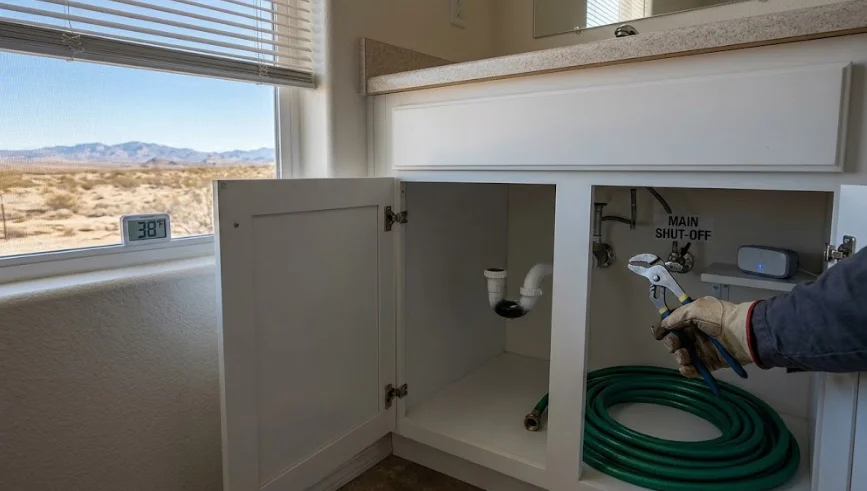
Mohave County has a large seasonal population: snowbirds who head out for the summer heat, second-home owners who visit a few months a year, and residents who travel for extended stretches. Whatever the reason a home sits empty, plumbing problems don’t pause just because nobody’s there to notice them.
A leak that would get caught in a day at an occupied home can run for weeks in a vacant one. A pipe that freezes overnight might not be discovered until you walk in the door months later. This checklist covers what to do before you leave and what to check the moment you’re back.
Table of Contents
Why Vacant Homes Face Higher Plumbing Risk
An occupied home has a built-in early warning system: someone notices the drip under the sink, hears the toilet running, or sees the water bill creep up. A vacant home doesn’t have that.
A few specific risks apply to homes left empty in Mohave County:
- Undetected leaks run far longer. A small supply line leak that would get fixed in a day at an occupied home can run for the entire time you’re away, causing far more water damage.
- Freeze risk with nobody to respond. If you’re away during one of Kingman’s occasional cold snaps, there’s no one home to let a faucet drip or notice early signs of a frozen line.
- Stagnant water affects quality. Water sitting unused in pipes for weeks can develop an odd taste or odor, and in homes with hard water, mineral settling can be more noticeable after a long period of no flow.
- Water heater strain. A tank left fully powered for months with no water use isn’t doing anything productive and adds unnecessary wear.
Before You Leave: Checklist
| Task | Why It Matters |
|---|---|
| Shut off the main water supply | Prevents any leak or burst pipe from causing ongoing damage while you’re gone |
| Drain remaining water from lines | Reduces freeze risk if you’re leaving during cooler months |
| Turn water heater to vacation mode or off | Avoids running the unit with no water demand |
| Check all faucets and toilets for leaks | Catches small issues before they become bigger ones with no one around |
| Disconnect and drain outdoor hoses | Prevents freeze damage to spigots during winter departures |
| Clear gutters and check outdoor drainage | Reduces flooding risk if a storm hits while you’re away |
| Consider a leak detection device | Alerts you remotely if something goes wrong in your absence |
Extra Steps If Leaving During Winter Months
If you’re heading out during the part of the year when Kingman sees occasional freezes, a few additional steps matter:
- Shut off the main water valve completely, rather than just turning fixtures off, so no water sits in the lines under pressure.
- Open faucets briefly to drain remaining water from the pipes after shutting off the main supply.
- Add plumbing antifreeze to drain traps in sinks, tubs, and toilets to prevent trap seals from freezing and cracking.
- Insulate exposed pipes in garages, crawl spaces, and exterior walls before you go, not after you’re already gone.
Homes with a history of freeze issues benefit from a deeper look before an extended winter absence — our guides on how to prevent frozen pipes in a desert climate and winter plumbing tips for Kingman’s occasional freezes cover the full picture if you want to prep beyond this checklist.
Extra Steps If Leaving During Monsoon Season
Departures during summer carry a different risk: storms hitting an empty house with no one to catch a backup or flooding issue early.
- Confirm outdoor drainage directs water away from the foundation before you leave
- Check that any sump pump (if your property has one) is functioning and the pit is clear
- Consider a water sensor near ground-level areas prone to pooling
When You Return: Checklist
Coming back doesn’t mean turning everything on and assuming it’s fine. Run through this before settling back in:
- Turn the main water supply back on slowly and check for any hissing or unusual sounds that could indicate a leak.
- Run every faucet for a minute or two to flush stagnant water out of the lines before using it for drinking or cooking.
- Check under sinks and around the water heater for any signs of leaking that may have started while you were gone.
- Flush toilets and check that they refill normally, since trap seals can occasionally dry out during long vacancies even outside of winter.
- Restart your water heater and monitor it for the first day, checking for leaks around fittings before returning to normal use.
If anything seems off during this walkthrough, it’s worth having it checked before you assume everything is fine. A leak detection inspection can confirm there’s no hidden damage from your time away, especially if the home was vacant for several months.
When to Call a Plumber
A few situations are worth professional attention rather than handling solo:
- You’re unsure how to properly winterize the plumbing before an extended absence
- You return to find water damage, even minor, and don’t know the source
- Your water heater hasn’t been serviced in years, and you’re planning to leave it unused for months
- You want a smart leak detection or automatic shutoff system installed before your next trip
If you come home to an active leak or water damage, an emergency plumber can assess the damage and start repairs immediately. For freeze-related pipe failures discovered on return, pipe break repair addresses the immediate issue before it’s compounded by continued water loss.
Prevention Tips for Seasonal Residents
- Install a smart water leak sensor with remote alerts, so you’re notified of a problem while you’re still away rather than after you return.
- Consider an automatic shutoff valve that closes the main supply if it detects unusual flow, a useful safeguard for homes left empty for months at a time.
- Schedule a plumbing check with a professional shortly before each seasonal departure, especially if the home has a history of hard water buildup or aging pipes — see why Kingman, AZ has hard water and what it does to your pipes for background on how that buildup affects vacant homes over time.
- Ask a neighbor or property manager to do a quick visual check partway through a long absence, if remote monitoring isn’t an option.
FAQs
Should I shut off the main water valve every time I leave, even for a short trip?
For trips longer than a week or two, yes. It’s the single most effective step for limiting damage if a leak does develop while you’re gone.
Is it safe to leave my water heater fully on while the house is empty?
It’s not dangerous, but it’s unnecessary wear and cost. Switching to vacation mode or turning it off (with the water supply also off) is the better option for extended absences.
Will stagnant water make my tap water unsafe when I return?
It’s usually a taste and odor issue rather than a safety one, but running faucets for a few minutes before use clears out water that’s been sitting and is the simplest precaution.
What’s the biggest plumbing risk for a home left empty during a Kingman winter?
A frozen and cracked pipe that isn’t discovered until you return, sometimes weeks after the damage started. Draining the lines and shutting off the main valve before you leave is the best defense.
Is a smart leak detector worth it for a seasonal home?
For homes left vacant for extended periods, yes. It’s one of the few ways to catch a problem while you’re still away instead of finding it after significant damage has already occurred.
If you’re prepping your Kingman home for an extended absence, a licensed plumber can winterize your plumbing and check for hidden risks before you go. Contact us to schedule a pre-departure plumbing check.
Sources:
- EPA — WaterSense: preventing water loss from undetected leaks
- National Weather Service — Arizona seasonal weather patterns