Most homeowners think about frozen pipes as the seasonal plumbing risk. In Kingman, summer heat causes just as many outdoor plumbing failures, just more gradually. Months of triple-digit temperatures wear down hose bibs, exposed piping, and irrigation lines in ways that often go unnoticed until a fitting cracks or a leak shows up at the worst possible time.
This guide covers exactly how desert heat damages outdoor plumbing, what to watch for, and how to protect fixtures that spend all summer exposed to Kingman’s sun.
Table of Contents
How Extreme Heat Affects Outdoor Plumbing
Heat damage to plumbing isn’t a single event like a burst pipe from freezing. It’s cumulative, and it shows up through a few specific mechanisms.
- Thermal expansion and contraction. Metal and plastic pipe materials expand in daytime heat and contract as temperatures drop at night. Repeated over months, that constant movement stresses joints and fittings until they eventually fail.
- UV degradation. Plastic components, especially PVC and rubber washers in hose bibs, break down under prolonged sun exposure. The material becomes brittle and more prone to cracking.
- Soil movement. Extreme surface heat dries and shifts soil around buried lines, which can put uneven pressure on underground pipe connections over time.
- Increased water pressure fluctuation. Hot weather often means heavier irrigation and outdoor water use, and inconsistent pressure spikes add extra wear to fittings already weakened by heat exposure.
Fixtures dealing with Kingman’s hard water face a compounding problem here too, since mineral scale buildup on top of heat-related wear leaves less structural give in a fitting that’s already stressed — a factor covered in more detail in why Kingman, AZ has hard water and what it does to your pipes.
Common Heat-Related Outdoor Plumbing Problems
| Problem | Typical Cause | What You’ll Notice |
|---|---|---|
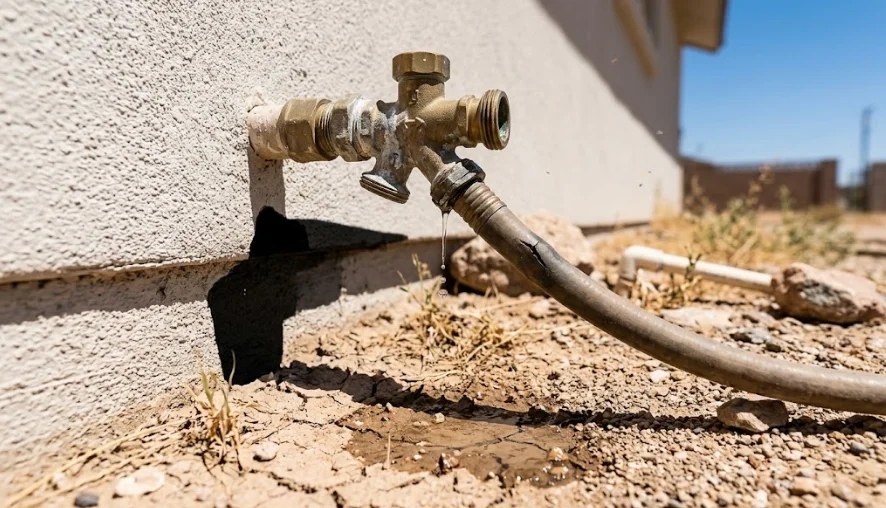
| Cracked hose bibs | UV and heat breakdown of washers and fittings | Dripping or leaking at the spigot even when off |
| Brittle PVC irrigation lines | Prolonged sun exposure | Cracks or breaks along exposed sections |
| Loose or leaking pipe joints | Repeated thermal expansion and contraction | Damp soil or pooling near buried connections |
| Reduced water pressure outdoors | Soil shifting around buried lines | Weak flow at hose bibs or sprinkler heads |
| Warped exterior fixtures | Direct, prolonged sun exposure | Visible cracking or discoloration on plastic components |
How to Protect Outdoor Plumbing From Heat Damage
- Inspect hose bibs and fittings each spring, before the hottest months arrive, and again mid-summer if you notice any drip or resistance turning the handle.
- Shade exposed pipe and irrigation lines where possible. Even partial shade reduces the daily temperature swing that drives thermal stress.
- Check irrigation lines for cracking, especially sections that run above ground or close to the surface where sun exposure is direct.
- Replace washers and gaskets proactively. These are the cheapest components in the system and the first to fail from UV exposure — replacing them before they crack is far less costly than a leak.
- Monitor outdoor water pressure, since a noticeable drop can point to a developing leak in a buried line before it surfaces visibly.
- Avoid leaving hoses attached long-term. Beyond the freeze risk in winter, a hose left connected all summer traps heat and pressure against the bib fitting.
If a hose bib is already dripping or hard to turn, it’s usually a sign the internal washer has broken down from heat exposure. A straightforward faucet repair visit can replace the worn components before the fitting cracks entirely and turns a small drip into a bigger leak.
When to Call a Plumber
Most outdoor heat damage develops slowly, but a few signs call for prompt attention:
- A hose bib that won’t fully shut off or leaks steadily
- Pooling water or unusually damp soil near a buried line with no obvious surface cause
- A noticeable, sustained drop in outdoor water pressure
- Cracked or split sections of exposed irrigation pipe
- Any sign of a leak near the main line where it enters the house
Damage that’s already reached a buried line is harder to diagnose without the right equipment. A leak detection inspection can pinpoint the source without unnecessary digging, and if a section of line has already failed, pipe break repair addresses it directly.
Prevention Tips
- Walk your property every few weeks during peak summer and check hose bibs, visible pipe, and irrigation lines for early signs of wear.
- Replace old rubber washers and gaskets before they crack rather than after a leak appears.
- Where possible, choose UV-resistant materials for any exposed pipe or irrigation replacement work.
- Keep outdoor water pressure at a consistent, moderate level rather than running high pressure through summer months, which adds unnecessary stress to already heat-worn fittings.
- Include outdoor fixtures in your regular maintenance routine rather than treating them as separate from indoor plumbing — see our annual plumbing maintenance checklist for how outdoor checks fit into a full-year schedule.
According to the National Weather Service, Kingman regularly sees summer highs well above 100°F for extended stretches, conditions that accelerate the kind of material breakdown that leads to cracked fittings and brittle outdoor plumbing components over time.
FAQs
Why do hose bibs fail more often in summer than other outdoor fixtures?
They combine two stress factors: constant sun exposure that breaks down rubber washers, and frequent use during peak watering season that wears fittings faster than fixtures used occasionally.
Can heat damage really affect pipes I can’t see, like buried irrigation lines?
Yes. Surface heat dries and shifts soil around buried lines, which can loosen joints or connections even though the pipe itself isn’t in direct sun.
Is it worth replacing hose bib washers before they actually start leaking?
Yes, especially heading into or through summer. Washers are inexpensive, and replacing them proactively avoids the water damage and higher repair cost that comes with a fitting that fails completely.
Does hard water make heat-related outdoor plumbing damage worse?
It can. Mineral buildup adds extra stress to fittings that are already weakened by heat and UV exposure, reducing how much wear they can handle before failing.
How often should I inspect outdoor plumbing during summer?
A quick check every few weeks during peak heat is enough to catch most issues early, with closer attention paid to any hose bib or fitting that feels stiff or shows visible wear.
If you’re noticing drips, pressure changes, or visible wear on your outdoor plumbing this summer, a licensed Kingman plumber can catch the problem before it turns into a bigger repair. Contact us to schedule an outdoor plumbing check.
Sources:
- National Weather Service — Kingman, AZ seasonal temperature data
- EPA — WaterSense: outdoor water use and fixture maintenance