
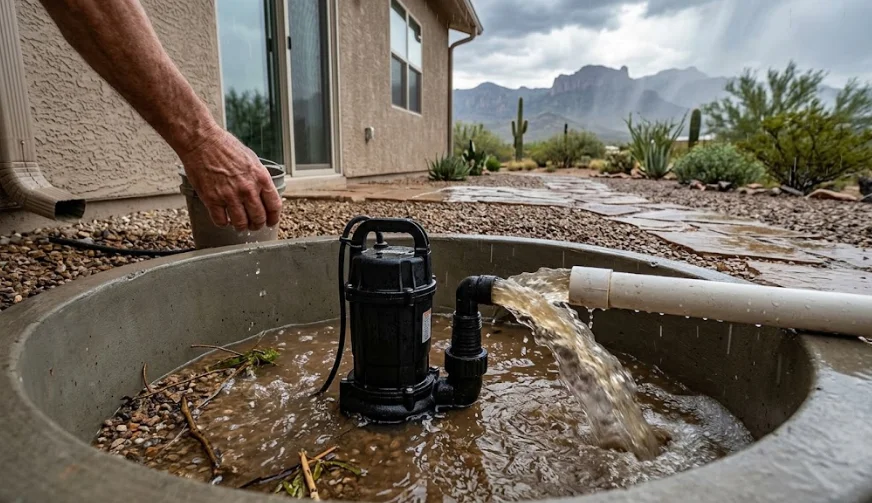
Every summer, monsoon storms roll through Mohave County fast and hard. Weeks of dry ground get hit with sudden downpours, and homes that were fine all year suddenly deal with backed-up drains, flooded yards, or water finding its way where it shouldn’t. A little plumbing prep before the season starts can save you from an emergency call in the middle of a storm.
This guide walks through what monsoon season does to home plumbing in Kingman, what to check now, and when a problem is serious enough to call a professional.
Table of Contents
Why Monsoon Season Stresses Kingman Plumbing Systems
Kingman sits in a high desert climate where soil stays bone-dry for months, then absorbs a heavy dose of rain in a short window. That swing matters for plumbing in a few specific ways.
- Ground movement. Dry soil around Kingman shrinks and cracks, then expands quickly once monsoon rain soaks in. That shifting puts stress on underground water lines and sewer laterals, which can already be brittle from years of hard water mineral buildup.
- Overwhelmed drainage. Many older Mohave County properties weren’t built with heavy stormwater flow in mind. Yards, driveways, and even foundations can direct water toward the house instead of away from it.
- Sewer backups. Municipal and septic systems both see higher volumes during storms. If your home’s drain lines are already partially blocked, monsoon rain is often what pushes a slow drain into a full backup.
Homes with existing hard water issues face extra risk here, since mineral buildup narrows pipe interiors and reduces how much flow they can handle — a problem covered in more detail in why Kingman, AZ has hard water and what it does to your pipes. Narrower pipes have less room to handle the added stress storms bring.
Common Monsoon Plumbing Problems in Kingman
| Problem | What Causes It | Where You’ll Notice It |
|---|---|---|
| Sewer backups | High water table, root intrusion, blocked lines | Slow drains, gurgling toilets, sewage odor |
| Sump pump failure | Power outages, overworked pumps, old equipment | Standing water in basement or crawl space |
| Slab leaks | Ground shifting, pipe corrosion | Warm spots on floor, unexplained water bills |
| Yard flooding near foundation | Poor grading, clogged gutters | Pooling water after storms |
| Outdoor spigot damage | Wind, debris, pressure surges | Leaks or drips at hose connections |
How to Prepare Your Plumbing Before Monsoon Season
Work through this checklist in the weeks before storm season ramps up, typically June through September in Mohave County.
- Test your sump pump. Pour a bucket of water into the pit and confirm it kicks on and drains properly. If it hasn’t run in months, don’t assume it still works.
- Clear gutters and downspouts. Debris buildup sends rainwater toward your foundation instead of away from it.
- Inspect outdoor drains and grading. Walk your property after a light rain and note where water pools near the house.
- Check for slow drains now. A drain that’s sluggish in dry weather will likely back up completely once storm volume hits the sewer line.
- Look at exposed pipes and spigots. Replace worn washers or fittings before wind and debris make small leaks worse.
- Locate your main water shutoff valve. Know exactly where it is and confirm it turns smoothly, so you can act fast if a pipe fails during a storm.
A slow or gurgling drain is often the first warning sign of a bigger blockage. If you’re already noticing that, it’s worth having it checked before the season starts rather than after a backup — a professional drain cleaning service can clear the line and check for root intrusion or mineral buildup before monsoon rain pushes it over the edge.
When to Call a Plumber
Some issues are fine to monitor. Others need attention right away. Call a plumber if you notice:
- Sewage smell or gurgling sounds from drains, especially after rain
- Water pooling against your foundation that doesn’t drain within a few hours
- A sump pump that’s not turning on, cycling constantly, or making grinding noises
- Warm or damp spots on flooring, which can point to a slab leak
- Any visible pipe break or active leak on your property
Storm-related plumbing failures rarely wait for regular business hours. If you’re dealing with active flooding or a burst line, an emergency plumber can respond before the damage spreads to your home’s structure or foundation.
Prevention Tips for the Rest of the Season
- Recheck your sump pump and gutters after each major storm, not just once at the start of the season.
- Keep a battery backup or generator on hand for your sump pump in case of power outages during storms.
- Watch your water bill for unexplained spikes, which can signal a hidden leak underground or under the slab.
- If you’ve had recurring slow drains or pipe issues, ask about a full leak detection inspection before the next round of storms.
- For homes with aging or corroded lines, monsoon season is a good time to ask a plumber about pipe break repair options before a small crack becomes a bigger failure.
According to the National Weather Service, Arizona’s monsoon season typically runs from mid-June through the end of September, with the heaviest rainfall concentrated in July and August — making early prep in late spring the most effective timing for Kingman homeowners.
FAQs
Does monsoon rain actually affect underground pipes, or just surface drainage?
Both. Heavy rain after dry conditions causes soil to expand quickly, which shifts and stresses buried water and sewer lines, especially ones already weakened by corrosion or mineral buildup.
My sump pump worked fine last year. Do I still need to test it?
Yes. Pumps sit unused for months between storms, and motors, float switches, and check valves can fail silently. A quick bucket test takes a few minutes and confirms it’s ready.
What’s the first sign of a slab leak after a storm?
Warm or damp patches on flooring, a noticeable drop in water pressure, or a water bill that jumps without an obvious reason are the most common early signs.
Can hard water make monsoon plumbing problems worse?
Yes. Mineral scale narrows pipes over time, so lines that are already partially blocked have less capacity to handle the higher water flow that comes with storm season.
Is it normal for drains to gurgle during heavy rain?
Occasional gurgling can happen with sudden pressure changes, but repeated gurgling or slow drainage usually points to a partial blockage that’s worth having inspected before it turns into a full backup.
If you’re in Kingman and want your plumbing checked before the next storm rolls in, a licensed plumber can spot weak points early and help you avoid an emergency call mid-monsoon. Contact us at Plumber Kingman AZ to schedule a pre-season inspection.
Sources:
- USGS — Arizona monsoon precipitation and groundwater data
- National Weather Service — Arizona monsoon season overview