
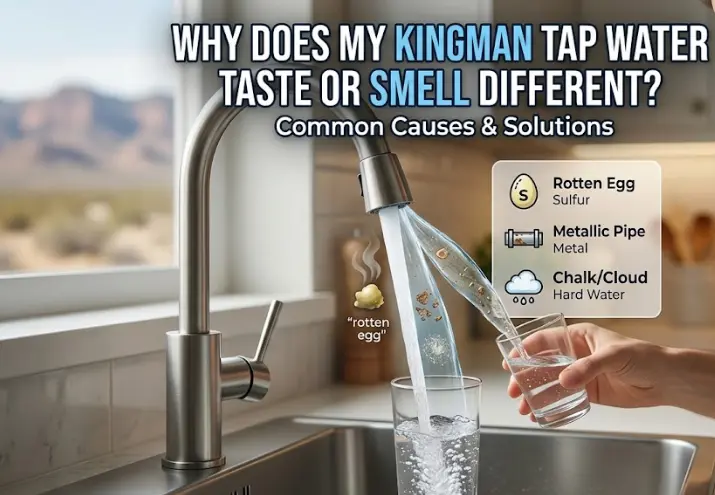
If your tap water suddenly tastes metallic, smells like rotten eggs, or just seems “off,” you’re not imagining it. Many Kingman homeowners notice changes in their tap water taste or smell, and most causes are easy to identify once you know what to look for.
Some causes are harmless. Others point to a plumbing or water heater issue that needs attention. This guide walks through the most common reasons and what to do about each one.
Table of Contents
Common Reasons Tap Water Tastes or Smells Different
Chlorine or Bleach Smell
City water suppliers add chlorine to kill bacteria. A mild chlorine smell, especially right after the city flushes water lines or adjusts treatment levels, is normal and not a health concern.
If the smell is strong or sudden, it usually fades within a day or two. Running the cold tap for a minute often helps.
Rotten Egg (Sulfur) Smell
This smell almost always points to your water heater, not the water supply. Inside the tank, a magnesium or aluminum anode rod reacts with sulfur bacteria and produces hydrogen sulfide gas — the classic “rotten egg” odor.
This is especially common in homes with older tanks or water that sits unused for a while, like a guest bathroom. A plumber can flush the tank or replace the anode rod to fix it.
Metallic Taste
A metallic taste usually comes from corroding pipes, especially older galvanized steel or copper lines. Low pH water can also pull small amounts of metal from pipes as it passes through.
This is more common in older Kingman homes with original plumbing that hasn’t been updated.
Earthy or Musty Taste
This is typically a mineral or sediment issue rather than a safety problem. It happens when sediment builds up in pipes, water heaters, or storage tanks, often tied to the hard water common in this area.
Cloudy or Chalky Water
Cloudy water that clears from the bottom up is usually just trapped air bubbles — harmless. But a consistently chalky taste or white residue on fixtures points to mineral buildup from hard water.
Why Kingman Water Is More Prone to This
Kingman’s groundwater naturally carries a high mineral content, which means most homes here deal with hard water. Over time, those minerals build up inside pipes, fixtures, and water heaters, which changes both taste and smell. We’ve covered this in detail in our post on why Kingman, AZ has hard water and what it does to your pipes.
Hard water mineral buildup is also one of the biggest reasons water heaters develop that sulfur smell faster than they would in areas with softer water.
How to Fix It
Depending on the cause, here’s where to start:
- Run the tap for 1–2 minutes if the smell is chlorine-related or the water has been sitting.
- Flush your water heater if you notice a sulfur smell — sediment and anode rod reactions build up in the tank over time.
- Check your home’s pipe age and material if you notice a metallic taste, especially in homes built before the 1980s.
- Test your water hardness if you’re seeing chalky residue, cloudy water, or scale buildup on fixtures.
- Install a filtration or softening system if hardness or taste issues are ongoing rather than occasional.
If you’re unsure where to start, our guide on signs you need a water softener can help you figure out if hardness is the root cause.
Quick Reference: Smell/Taste to Likely Cause
| Symptom | Likely Cause | Typical Fix |
|---|---|---|
| Chlorine/bleach smell | City water treatment | Run tap, usually resolves itself |
| Rotten egg smell | Water heater anode rod reaction | Tank flush or anode rod replacement |
| Metallic taste | Corroding or aging pipes | Pipe inspection, possible repiping |
| Earthy/musty taste | Sediment or mineral buildup | Water heater flush, filtration |
| Chalky taste, white residue | Hard water | Water softener installation |
When to Call a Plumber
A quick smell after running the tap for a minute isn’t usually urgent. But you should call a plumber if:
- The rotten egg smell persists after a few days
- Water looks discolored (brown, yellow, or rusty) rather than just cloudy
- The taste or smell is new and hasn’t changed with time
- You notice reduced water pressure along with the odor
- Multiple fixtures in the home are affected at once
A licensed plumber can flush your water heater, inspect your pipes, and test for hardness to pinpoint the actual cause instead of guessing. If your water heater is the source, our tankless water heater repair page covers signs of a failing unit worth watching for.
Prevention Tips
- Flush your water heater once a year to prevent sediment and sulfur buildup.
- Replace the anode rod every 3–5 years, depending on water hardness.
- Install a whole-home water softener if hardness is a recurring issue.
- Run rarely-used faucets weekly to prevent stagnant water buildup.
- Have your plumbing inspected if your home is older than 30 years.
If comparing your filtration options, our breakdown of water softener vs. water filtration explains which one actually solves taste and odor problems versus just hardness.
FAQs
Is it safe to drink water that smells like rotten eggs?
Usually yes, if the smell is from your water heater rather than the main supply, since it’s caused by bacteria reacting with the anode rod, not contamination. Still, get it checked if the smell doesn’t go away.
Why does only my hot water smell bad?
This almost always points to the water heater, not your water supply. Cold water usually smells fine because the anode rod reaction only happens inside the tank.
Can hard water make tap water taste different?
Yes. Hard water minerals like calcium and magnesium can give water a chalky or flat taste, and they build up in pipes and heaters over time, making the problem worse.
Should I get my water tested?
If the taste or smell is persistent, discolored water appears, or you’re on a well, testing is worth it. It removes the guesswork and confirms whether it’s a plumbing issue or a supply issue.
How often should I flush my water heater?
Once a year for most homes, though homes with harder water may benefit from flushing every 6–8 months.
If you’re in Kingman and your tap water smells or tastes off, a licensed plumber can pinpoint the cause and fix it — often the same day.
Sources: EPA – Water Quality and Health | CDC – Private Water Systems