
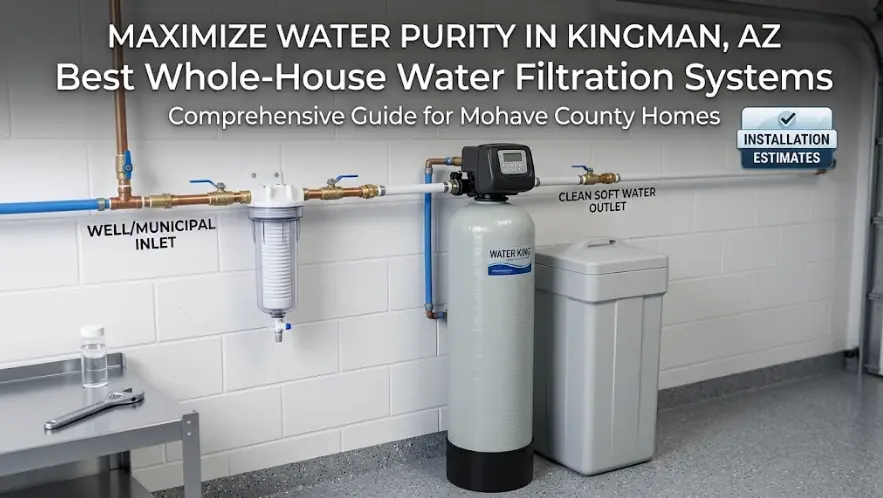
If you’ve noticed cloudy water, white scale on your faucets, or a metallic taste from the tap, you’re not imagining it. Well and municipal water across Mohave County tends to run hard and mineral-heavy, and a whole-house water filtration system is usually the fix homeowners land on.
This guide breaks down the main system types, what they cost installed, and how to pick the right one for your home.
Table of Contents
Why Water Quality Is an Issue in Mohave County
Groundwater in this region passes through mineral-rich rock, which loads it with calcium, magnesium, and sometimes iron. Municipal supplies help with treatment, but hardness and sediment usually make it through to your pipes.
Common signs your home needs filtration:
- Scale buildup around faucets, showerheads, and inside the water heater
- Soap that won’t lather well
- Spots on dishes and glassware after washing
- Dry skin or dull hair after showers
- Reduced water pressure from clogged pipes
Left untreated, hard water shortens the life of water heaters, washing machines, and fixtures — and it’s a leading cause of the common water heater problems homeowners call about.
Types of Whole-House Water Filtration Systems
Not every home needs the same setup. The right system depends on what’s actually in your water.
1. Sediment Pre-Filters
These trap sand, rust, and dirt particles before water reaches your plumbing. They’re often paired with another system rather than used alone.
- Best for: Homes on well water or older galvanized piping
- Cost installed: $150–$400
- Maintenance: Filter swap every 2–3 months
2. Water Softeners (Salt-Based)
A softener swaps calcium and magnesium ions for sodium, which stops scale buildup at the source. This is the most common solution for hard water in this area.
- Best for: Homes with visible scale, spotty dishes, or reduced appliance lifespan
- Cost installed: $1,500–$3,500
- Maintenance: Refill salt monthly; resin bed lasts 10–15 years
3. Salt-Free Conditioners
These use a template-assisted crystallization process to prevent scale without adding sodium. They don’t technically “soften” water but reduce scale formation.
- Best for: Households wanting a low-maintenance, no-salt option
- Cost installed: $1,200–$2,800
- Maintenance: Cartridge replacement every 6–12 months
4. Whole-House Carbon Filtration
Carbon filters target chlorine taste, odor, and some organic contaminants, but they don’t remove hardness minerals.
- Best for: Municipal water with a chlorine taste or smell
- Cost installed: $800–$2,000
- Maintenance: Filter change every 6–12 months
5. Combination Systems (Softener + Carbon + Sediment)
Many homeowners end up with a multi-stage setup: sediment pre-filter, carbon tank, and softener in sequence. This handles hardness, taste, and particulates in one pass.
- Best for: Homes wanting comprehensive coverage
- Cost installed: $2,500–$5,500
Comparison at a Glance
| System Type | Removes Hardness? | Avg. Installed Cost | Maintenance |
|---|---|---|---|
| Sediment Filter | No | $150–$400 | Every 2–3 months |
| Salt-Based Softener | Yes | $1,500–$3,500 | Monthly salt refill |
| Salt-Free Conditioner | Reduces scale only | $1,200–$2,800 | Every 6–12 months |
| Carbon Filter | No | $800–$2,000 | Every 6–12 months |
| Combination System | Yes | $2,500–$5,500 | Mixed schedule |
How to Choose the Right System
- Get your water tested first. A basic hardness and mineral test tells you what you’re actually dealing with instead of guessing.
- Check your household water usage. Larger families need higher-grain-capacity softeners to avoid running out of soft water mid-week.
- Factor in your water heater. If scale has already built up, pairing filtration with a tankless water heater repair inspection can catch damage early.
- Consider space and location. Softeners and combo systems need room near the main water line, usually in a garage or utility area.
- Compare warranty terms. Resin tanks and control valves should carry at least a 5–10 year warranty.
Installation: What to Expect
A whole-house system ties into your main water line before it branches to fixtures, so professional installation matters. A poorly connected unit can cause pressure drops or leaks at the joint.
Installation typically involves:
- Shutting off the main water supply
- Cutting into the main line and installing bypass valves
- Mounting the filtration/softener tank and connecting drain lines
- Pressure-testing the system before restoring water flow
This is also a good time to have your water line repair checked, since older pipe sections sometimes reveal corrosion once opened up.
When to Call a Plumber
DIY filtration kits exist, but whole-house systems involve cutting into your main water line — a mistake here can mean a flooded utility room. Call a licensed plumber if:
- You’re unsure which system matches your water test results
- Your home still has galvanized or older piping
- You notice leaks, rust-colored water, or pressure loss after a DIY install
- You want the unit tied into an existing softener loop or water heater setup
Prevention & Maintenance Tips
- Replace sediment and carbon cartridges on schedule, not just when flow slows
- Check softener salt levels monthly
- Flush your water heater annually to clear mineral buildup that filtration didn’t catch
- Schedule a yearly system check, especially if you’re also monitoring for a pipe break repair need on older plumbing
If you’re in Kingman and dealing with hard water, scale buildup, or unclear taste and odor issues, a licensed plumber can test your water and recommend the right system for your home.
FAQs
Does Kingman city water need a whole-house filter?
Yes, in most cases. Municipal treatment removes contaminants but doesn’t soften water, so hardness minerals still reach your home’s pipes and fixtures.
How long does a whole-house water softener last?
A quality resin tank typically lasts 10–15 years with regular maintenance, while the control valve may need replacement sooner, around 7–10 years.
Can I install a water filtration system myself?
Basic sediment filters are DIY-friendly, but softeners and combo systems require cutting into the main water line, which is best left to a licensed plumber to avoid leaks or code issues.
Will a water softener lower my water pressure?
A properly sized system shouldn’t cause noticeable pressure loss. Pressure drops usually point to an undersized unit or a clogged pre-filter.
How much does it cost to run a whole-house softener monthly?
Salt and water usage for a standard softener typically adds $10–$20 per month, depending on household size and water hardness.