
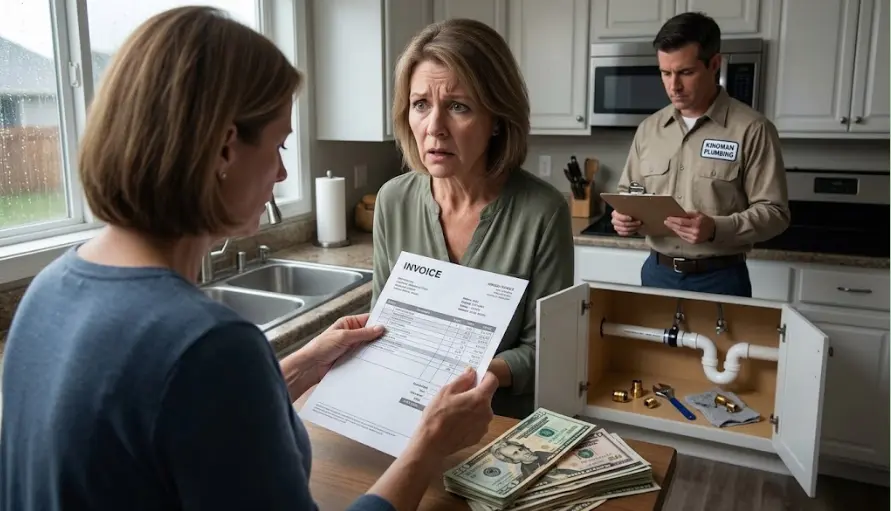
Getting a plumbing quote that looks reasonable and then receiving a bill that’s much higher is a common complaint among homeowners. Understanding the hidden plumbing costs that can show up in Kingman, AZ helps you budget accurately and avoid an awkward conversation at the end of a job.
Most of these extra charges aren’t scams. They’re real costs tied to parts, permits, or timing. The problem is that many plumbers don’t spell them out until after the work is done. Knowing what to ask upfront changes that.
Table of Contents
What Counts as a “Hidden” Plumbing Cost?
A hidden cost isn’t necessarily dishonest. It’s any charge that wasn’t clearly explained before the work started. This includes fees for showing up, fees for diagnosing the problem separately from fixing it, and charges added once a job turns out to be more involved than expected.
The issue usually comes down to communication, not the fee itself. A trip charge is fair if you know about it in advance. It becomes a problem when it appears as a surprise line item.
Common Hidden Fees to Watch For
Here are the charges that catch Kingman homeowners off guard most often.
| Fee Type | What It Usually Covers | How to Avoid Surprises |
|---|---|---|
| Trip or service call fee | Cost of the plumber traveling to your property | Ask if this is waived when you approve the repair |
| Diagnostic fee | Time spent identifying the problem before repair | Confirm whether it’s credited toward the final bill |
| After-hours or emergency fee | Work done nights, weekends, or holidays | Ask for the rate difference before agreeing to a same-day visit |
| Parts markup | Standard retail markup on materials | Ask whether parts are itemized or bundled into labor |
| Permit and inspection fee | Required for water heater swaps, repiping, and similar jobs | Confirm who pulls the permit and who pays for it |
| Rural travel charge | Extra mileage for properties outside the main service area | Ask if your address falls in a standard or extended zone |
| Cleanup or disposal fee | Removing old fixtures, pipe, or debris | Ask if disposal is included in the quoted price |
None of these fees are automatically unreasonable. The goal is knowing which ones apply to your job before the plumber starts working, not after.
Why These Costs Sneak Up on Homeowners
A few patterns show up again and again when homeowners get an unexpectedly high bill.
Verbal-only quotes. A number given over the phone or at the door isn’t binding unless it’s written down. Scope tends to shift once the plumber is under the sink or behind the wall.
Open-ended hourly billing. Hourly rates without a cap can run long if the job hits complications, like corroded fittings or old, mismatched pipe.
Unclear scope of work. A quote for “fixing the leak” can mean very different things depending on whether it includes drywall access, parts, or a follow-up visit.
No mention of permits. Jobs like water heater repair or repiping sometimes require permits that add cost and time, but this often isn’t discussed until the paperwork stage.
How to Avoid Hidden Plumbing Costs
- Get a written estimate before work begins. It should list labor, parts, and any conditional fees.
- Ask flat-rate vs. hourly directly. Flat-rate pricing is easier to budget for and leaves less room for surprises.
- Ask what triggers extra charges. After-hours work, rural addresses, and permit requirements are the most common triggers.
- Request an itemized invoice. This makes it easy to see exactly what you’re paying for.
- Confirm warranty terms. Ask whether a callback for the same issue is free within a set window.
- Compare at least two quotes. This gives you a baseline for what’s normal versus inflated.
Questions to Ask Before You Hire
- Is this a flat rate or an hourly rate, and is there a cap?
- Does the diagnostic fee apply toward the repair cost?
- Is a permit required, and who is responsible for pulling it?
- Are parts itemized separately from labor?
- Is cleanup and disposal included?
- What’s the warranty on labor and on parts?
Asking these questions before a plumber starts work takes a few minutes and can prevent a much longer conversation later.
When to Call a Licensed Plumber
Some situations are worth paying for expert diagnosis even if it means a service call fee — active leaks, no hot water, sewer backups, or anything involving gas lines. In these cases, a fast, accurate diagnosis from a licensed plumber usually costs less than letting the problem sit and cause more damage.
For slower issues, like a running toilet or a minor drip, it’s reasonable to get a couple of quotes first. Jobs like drain cleaning or persistent slow leaks are also good candidates for a leak detection visit before committing to a larger repair.
If you’re weighing overall plumbing costs for your home, our plumber cost guide for Kingman breaks down typical pricing structures in more detail. Staying current on basic upkeep through an annual maintenance routine also reduces the odds of an expensive surprise repair in the first place.
If you’re in Kingman and want a clear, written estimate before any work starts, reach out to our team — we’ll walk you through pricing upfront.
FAQ
Is a trip fee normal for a plumbing visit?
Yes, many plumbers charge a small fee to cover travel and scheduling. It’s common practice, especially for same-day requests, and should be disclosed before the visit.
Should I pay a diagnostic fee if I don’t hire the plumber?
Some companies charge for diagnosis whether or not you proceed with the repair, while others waive it if you approve the work. Ask this before scheduling.
Why did my quote change after the plumber arrived?
This usually happens when the actual problem is more complex than described over the phone, such as hidden corrosion or an outdated pipe layout. A written, itemized estimate helps limit how much a quote can shift.
Do all plumbing jobs require a permit?
No. Simple repairs like fixing a faucet usually don’t need one, but larger jobs like water heater replacement or repiping often do, depending on local code.
Is flat-rate pricing better than hourly?
Flat-rate pricing is generally easier to budget for since you know the total cost upfront. Hourly pricing can work in your favor for very quick fixes, but it carries more risk if the job runs long.