
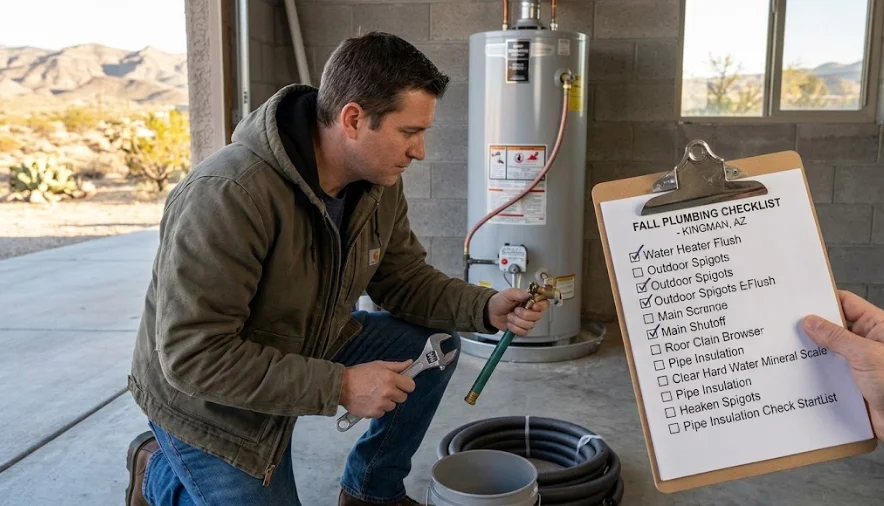
Fall is the easiest time to catch plumbing problems before they turn into winter emergencies. Once monsoon season winds down and temperatures start easing, it’s worth a walk-through of your home’s plumbing while repairs are still simple and scheduling isn’t a rush.
This checklist covers what to check indoors and out, what typically needs attention after a Kingman summer, and which items are worth having a plumber look at before the season’s first cold snap.
Table of Contents
Why Fall Prep Matters in Kingman
Summer in Mohave County is hard on plumbing in ways that aren’t always obvious. High heat stresses water heaters, monsoon storms test drainage and outdoor fixtures, and hard water keeps building scale inside pipes and appliances all season long.
Fall is the window before that accumulated wear turns into a bigger problem — and before the occasional freeze that hits Kingman most winters puts extra strain on anything already weakened. A short checklist now is far less disruptive than an emergency repair once temperatures drop.
Fall Plumbing Checklist
| Area | What to Check | Why It Matters |
|---|---|---|
| Water heater | Sediment buildup, temperature setting, age | Summer heat and hard water add strain; fall is a good time for a tune-up |
| Outdoor spigots & hoses | Leaks, cracked fittings, hose attachments | Left connected, they’re the first thing to freeze once cold hits |
| Drains (kitchen & bath) | Slow drainage, gurgling | Monsoon debris and grease buildup often show up as fall slowdowns |
| Water pressure | Unusually high or low pressure | Can signal a hidden leak or aging expansion tank |
| Toilets & fixtures | Running toilets, dripping faucets | Small leaks waste water year-round and worsen with age |
| Exposed pipes | Insulation condition in garage/crawl space | Needed before freeze season, covered in more detail below |
| Sump pump (if present) | Test function, clear the pit | Post-monsoon debris can clog pits before winter rain |
Step-by-Step Fall Plumbing Walkthrough
- Inspect and flush your water heater. Sediment builds up faster in areas with hard water like Kingman, and a flush before winter helps the unit run efficiently when it’s working hardest.
- Disconnect garden hoses and inspect spigots. Check for drips or cracked fittings now, while repairs are easy, rather than after the first freeze.
- Test water pressure at an indoor faucet. Pressure that’s noticeably higher or lower than usual can point to a developing leak or a failing expansion tank.
- Run water in every drain and note anything slow. Fall is a good time to clear buildup before holiday cooking and guests put extra demand on your kitchen drain.
- Check toilets for running water or phantom flushes. A worn flapper or fill valve wastes water constantly and is a quick, inexpensive fix.
- Look at exposed pipe sections in the garage or crawl space. Note anywhere insulation is missing or has worn down — this becomes more urgent as freeze season approaches.
- Locate your main shutoff valve and confirm it turns easily. If anything does go wrong this winter, this is the step that limits the damage fastest.
If your water heater has felt sluggish or inconsistent through the summer, a fall inspection is the right time to address it — a water heater repair or maintenance visit now avoids running into it during the first cold week of the year. Homes with tankless units benefit from the same timing, since a tankless water heater repair check can confirm the unit is ready for higher winter demand.
When to Call a Plumber
Some items on this checklist are simple DIY tasks. Others are worth a professional look before winter:
- Water pressure that’s noticeably changed since last season
- A water heater that’s more than 8–10 years old or showing signs of sediment buildup
- Slow drains that don’t clear with basic maintenance
- Any exposed pipe you can’t easily insulate yourself
- A running toilet or dripping fixture that hasn’t been addressed in a while
Drains that are already sluggish in the fall tend to get worse once holiday cooking and guests add extra load. A professional drain cleaning service before the season ramps up is easier to schedule now than during a Thanksgiving-week backup. If your water pressure check turned up something off, a leak detection inspection can rule out a hidden problem before it grows over the winter.
Prevention Tips Heading Into Winter
- Once your fall checklist is done, move on to freeze-specific prep — see our guides on winter plumbing tips for Kingman’s occasional freezes and how to prevent frozen pipes in a desert climate for the next steps.
- Address any hard water scale buildup now, since it makes pipes more brittle heading into freeze season — see why Kingman, AZ has hard water and what it does to your pipes for background.
- Replace worn washers, flappers, or fittings while parts and scheduling are easy to come by, rather than waiting for a winter failure.
- Keep a written note of your shutoff valve location somewhere accessible, not just in memory.
According to the EPA, household leaks can waste thousands of gallons of water a year even when they’re too small to notice day to day, which makes a fall inspection one of the more cost-effective maintenance habits a homeowner can keep.
FAQs
How long does a full fall plumbing checklist take?
Most of the walkthrough — spigots, drains, toilets, pressure check — takes under an hour. A water heater flush or full inspection is worth scheduling separately with a plumber.
Do I really need to flush my water heater every fall?
It’s not strictly required every year, but homes with hard water benefit from more frequent flushing since sediment builds up faster and reduces the unit’s efficiency over time.
My water pressure seems fine — do I still need to check it?
Yes, briefly. A quick check takes a minute and can catch a slow-developing issue, like a failing expansion tank, before it turns into a bigger repair.
Is fall really the best time for this, or does it not matter when I check?
Fall works well because it’s before both the temperature swings of freeze season and the extra demand of the holidays, giving you time to fix anything before it’s tested.
What’s the single most important item on this checklist?
Locating and testing your main shutoff valve. If anything else on this list does fail over the winter, knowing how to shut off water fast is what limits the damage.
If your fall walkthrough turns up something you’d rather have a professional confirm, a licensed Kingman plumber can check it out before winter puts it to the test. Contact us to schedule a fall plumbing inspection.
Sources:
- EPA — WaterSense: household leaks and water waste
- USGS — Arizona seasonal climate data