
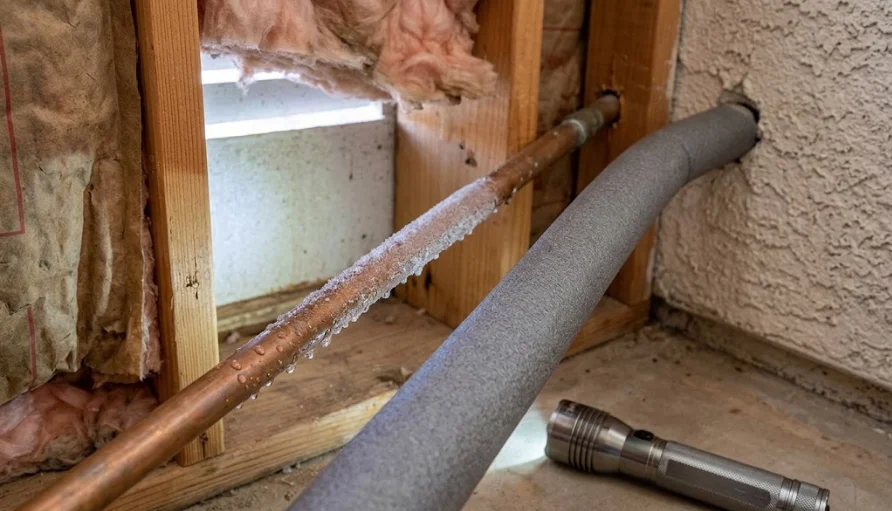
Desert homes have a blind spot when it comes to cold. Builders design for heat, not frost, so pipes often run through spaces that would never pass code in a colder state — uninsulated exterior walls, open crawl spaces, garages with no climate control. In Kingman, AZ, that gap doesn’t matter most of the year. It matters a lot on the handful of nights each winter when temperatures actually drop below freezing.
This guide breaks down why desert-built homes are more exposed to freeze damage than homes in colder climates, and the specific prevention steps that make the biggest difference.
Table of Contents
Why Desert Construction Makes Pipes More Vulnerable
In regions with regular winters, building codes typically require water lines to be buried below the frost line and insulated in exposed areas as a baseline standard. Desert climates rarely require either, since freezing temperatures are the exception, not the rule.
That leaves a few common vulnerabilities specific to how homes here are built:
- Shallow-buried supply lines. Underground pipes may sit closer to the surface than in colder climates, since deep frost protection was never a design requirement.
- Unconditioned garages and crawl spaces. These areas often carry water lines with no insulation and no heating, leaving pipes exposed to whatever the outside air does.
- Exterior-wall plumbing. Bathrooms and kitchens built against outside walls sometimes route pipes with minimal wall insulation between the pipe and the cold air outside.
- Hose bibs left connected. A garden hose left attached through winter traps water in the spigot and the line behind it, one of the most common freeze points in any desert home.
Pipes weakened by years of hard water buildup are also more prone to cracking under freeze pressure, since mineral scale makes pipe walls more brittle and less able to flex as ice expands inside them — a factor covered in more depth in why Kingman, AZ has hard water and what it does to your pipes.
Prevention Checklist for Desert Homes
| Area | Risk | Prevention Step |
|---|---|---|
| Garden hoses & spigots | Water trapped in the line freezes and cracks fittings | Disconnect hoses, install insulated spigot covers |
| Garage pipes | No insulation, no heat source | Add foam pipe sleeves, keep garage door closed on freeze nights |
| Crawl space lines | Exposed to outside air directly | Insulate exposed runs, seal crawl space vents before winter |
| Exterior-wall pipes | Minimal wall insulation | Open cabinet doors under sinks to let warm air circulate |
| Water heater (garage/outdoor) | Cold air slows recovery, can freeze supply lines | Insulate the unit and its intake line, check freeze-protection settings |
Long-Term Prevention Steps
Beyond the seasonal checklist, a few upgrades make a lasting difference for homes that deal with freeze risk every winter:
- Insulate all exposed pipe runs. Foam pipe sleeves are inexpensive and cover the most common freeze points: garages, crawl spaces, and attics.
- Seal air leaks near plumbing. Gaps around pipe penetrations in exterior walls let cold air reach the pipe directly. Simple caulking or spray foam closes that path.
- Relocate or reroute high-risk lines where possible. If a specific section freezes every year, moving it into a conditioned space during a remodel solves the problem permanently instead of managing it annually.
- Upgrade older or corroded sections. Pipes already compromised by mineral buildup or age are the most likely to fail during a freeze. If a section of your plumbing has a history of leaks or slow drainage, repiping that section removes the weak point before winter tests it.
- Check your water heater’s cold-weather performance. Units in garages or outdoor enclosures work harder in cold weather and are more exposed to freeze risk than indoor units. A pre-winter water heater repair check can catch aging components before a cold snap does.
For a night-of checklist covering what to do when a hard freeze is actually forecast — draining hoses, letting faucets drip, locating your shutoff valve — see our companion guide on winter plumbing tips for Kingman’s occasional freezes.
When to Call a Plumber
Prevention handles most of the risk, but a few situations call for a professional rather than a DIY fix:
- You’ve had the same section of pipe freeze more than once
- Pipes run through a space you can’t easily access to insulate yourself
- You’re not sure whether your water heater has adequate freeze protection
- A pipe has already cracked or burst and needs repair before it can be properly insulated
- You’re planning a remodel and want plumbing rerouted out of an exposed area
If a pipe does fail despite prevention efforts, pipe break repair addresses the immediate damage, and a leak detection inspection afterward can confirm no smaller cracks were missed nearby.
Prevention Tips at a Glance
- Disconnect and drain hoses before the season’s first freeze warning
- Insulate pipes in garages, crawl spaces, and attics
- Open cabinet doors under sinks during hard freezes
- Seal gaps around pipe penetrations in exterior walls
- Know your main shutoff valve location before you need it
- Address recurring freeze points permanently rather than patching them each year
FAQs
Why do desert homes freeze more easily than homes built for cold climates?
Desert homes aren’t built with the same insulation and frost-line burial standards used in colder regions, since freezing weather is rare. That leaves pipes more exposed when a cold snap does hit.
Is pipe insulation worth the cost if it only freezes a few nights a year?
Yes. Foam pipe sleeves cost very little compared to the water damage and repair costs from even one burst pipe, and they only need to be installed once.
Can I insulate pipes myself, or does it need a professional?
Most homeowners can install foam pipe sleeves and seal obvious gaps themselves. Pipes in hard-to-reach areas, or homes with a history of repeat freeze damage, are worth having a plumber assess.
Does hard water make pipes more likely to freeze and crack?
Hard water itself doesn’t cause freezing, but mineral buildup makes pipes more brittle over time, which increases the chance of a crack when water inside does freeze and expand.
How do I know if a section of pipe is at high risk before winter even starts?
Look for pipes in unconditioned spaces — garages, crawl spaces, exterior walls — with no visible insulation. Those are the sections most likely to freeze first.
If you want your home’s freeze risk assessed before the next cold snap, a licensed Kingman plumber can identify exposed pipe sections and recommend the right fix. Contact us to schedule a pre-winter plumbing check.
Sources:
- EPA — WaterSense: preventing water loss from frozen and burst pipes
- USGS — Arizona climate and precipitation data