
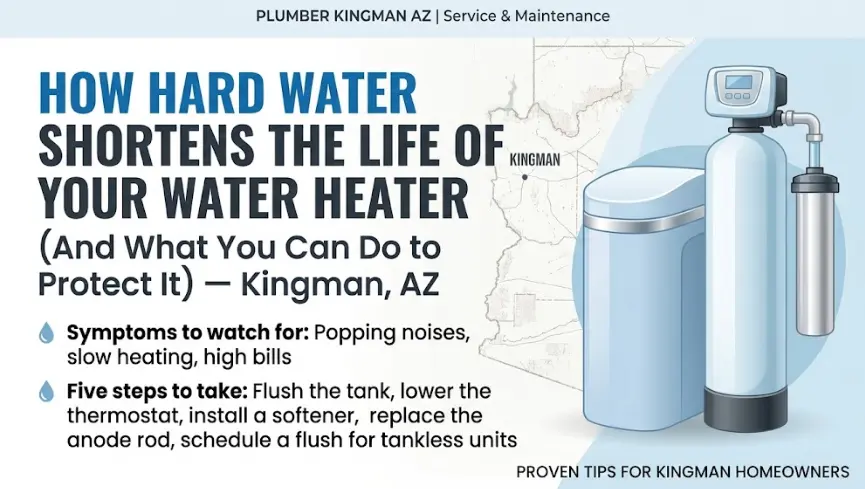
If your water heater in Kingman is failing years before it should, hard water is a likely reason. Kingman’s groundwater carries a heavy mineral load, and those minerals build up inside your tank every time it heats water.
Over time, this buildup insulates the heating element, forces the unit to work harder, and wears out parts faster than normal. The result: higher energy bills, strange noises, and a shorter tank life.
This guide explains how hard water damages a water heater, the warning signs to watch for, and what you can do to protect your unit.
Table of Contents
What Hard Water Does Inside a Water Heater
Hard water contains high levels of calcium and magnesium. When water heats up, these minerals separate out and settle as scale on the tank walls, heating element, and inlet pipes.
That scale layer acts like insulation. The heater has to run longer and hotter to reach the same temperature, which stresses the tank and shortens its service life.
In tankless units, scale narrows the internal water passages, restricting flow and reducing efficiency. This is why tankless systems in hard water areas often need more frequent service than the same model installed elsewhere.
Common Causes of Scale Buildup
- High mineral content in local groundwater — typical in Mohave County and much of Kingman
- Water heater temperature set too high, which speeds up mineral precipitation
- No water softener installed on the home’s main supply line
- Infrequent tank flushing, allowing sediment to compact at the bottom
- Old anode rod that’s stopped protecting the tank from corrosion
Signs Hard Water Is Damaging Your Water Heater
| Symptom | What’s Happening |
|---|---|
| Popping or rumbling noises | Water trapped under a layer of scale is boiling |
| Longer wait for hot water | Scale is insulating the heating element |
| Rising energy bills | Unit works harder to reach set temperature |
| Discolored or gritty water | Sediment breaking loose from tank walls |
| Reduced hot water pressure | Mineral deposits narrowing pipes or the tankless heat exchanger |
If you notice two or more of these, the tank is likely already carrying a meaningful scale layer.
How to Fix Hard Water Damage
1. Flush the Tank Annually
Draining a few gallons from the bottom of the tank removes loose sediment before it hardens into scale. This is the single most effective habit for extending tank life.
2. Lower the Thermostat Setting
Keeping the water heater at 120°F, rather than 140°F or higher, slows mineral precipitation and reduces scale formation.
3. Install a Water Softener
A whole-house softener removes calcium and magnesium before water reaches the heater, which is the most reliable long-term fix for Kingman’s water conditions.
4. Replace the Anode Rod
The anode rod attracts corrosion so the tank itself doesn’t rust. A rod coated in scale can’t do its job, so replacing it every 3-5 years helps protect the tank.
5. Consider a Tankless Descaling Service
For tankless systems, a descaling flush with a mild acidic solution clears mineral buildup from the heat exchanger and restores flow.
When to Call a Plumber
Some maintenance is DIY-friendly, but call a licensed plumber if you notice:
- Rusty water or a leaking tank
- Loud banging or popping that doesn’t stop after a flush
- No hot water, or water that won’t get past lukewarm
- A water heater older than 8-10 years showing any of the signs above
A professional can flush heavy sediment safely, inspect the anode rod, and tell you whether repair or replacement makes more financial sense. For tankless units specifically, our tankless water heater repair service covers descaling and heat exchanger diagnostics.
Prevention Tips for Kingman Homeowners
- Flush your tank every 12 months, or every 6 months if you don’t have a softener
- Set the thermostat to 120°F
- Install a whole-house water softener if you haven’t already
- Replace the anode rod on schedule, not just when it fails
- Watch your water pressure and hot water wait times as early warning signs
If you’re weighing repair against a full replacement, it also helps to understand common water heater problems beyond scale buildup, since age and sediment often combine to cause failure.
FAQs
How often should I flush my water heater in a hard water area like Kingman?
Every 6 months if you don’t have a softener, or once a year if you do. More frequent flushing prevents sediment from hardening into scale.
Does a water softener really extend water heater life?
Yes. Removing calcium and magnesium before they reach the tank is the most effective way to prevent scale buildup and extend the unit’s working life.
Can hard water damage a tankless water heater faster than a tank unit?
Yes, because the passages inside a tankless heat exchanger are narrow and scale restricts them quickly. Tankless units in hard water areas need more frequent descaling.
Is it worth repairing a scaled-up water heater or should I replace it?
If the tank is under 8 years old, a flush and anode rod replacement often solves the problem. Past that age, replacement is usually more cost-effective than repeated repairs.
What temperature setting is best to reduce scale buildup?
120°F balances safety, energy use, and mineral buildup. Higher settings speed up scale formation and increase burn risk.
If you’re in Kingman and your water heater is showing signs of scale damage, a licensed plumber can flush, inspect, and tell you exactly what it needs — contact Plumber Kingman Az for a quick diagnosis.
Sources: EPA WaterSense — Hard Water Facts, U.S. Department of Energy — Water Heater Maintenance
2 thoughts on “How Hard Water Shortens the Life of Your Water Heater in Kingman, AZ”